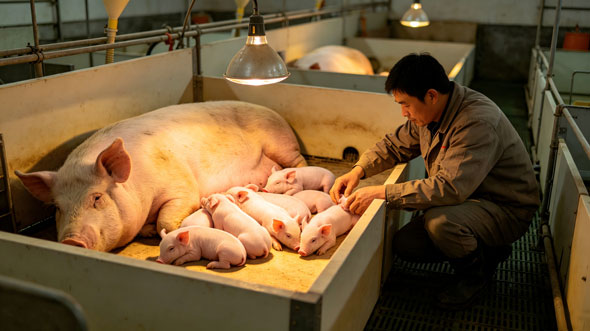
Diarrhea in piglets within the first three days of birth leads to high mortality rates and disrupts batch production on pig farms. When this issue occurs, laboratory testing is essential to identify the exact pathogen.
Escherichia coli (E. coli) is a common bacterium in pig farms. Its detection does not necessarily mean it is the primary cause of diarrhea. To confirm E. coli-induced neonatal scours, rule out other major pathogens including pseudorabies virus, porcine epidemic diarrhea virus (PEDV) and rotavirus first.
There are numerous serotypes of E. coli, making vaccines less targeted for effective prevention. Currently, standardized farm management remains the most reliable solution against E. coli diarrhea. Sows of lower parity are more likely to produce piglets affected by this disease, so extra care should be taken for these herds.
Key Preventive Measures
1. Thoroughly clean, disinfect and fully dry the farrowing rooms between batches.
2. Move sows to farrowing crates 1 to 2 days before delivery. Avoid transferring sows one week in advance, as this will cause severe environmental contamination and a sharp rise in harmful bacteria.
3. Administer intestinal acidifiers or targeted antibiotics to sows 2 weeks prior to entering farrowing crates to reduce harmful bacteria in their gut.
4. Fully clean the body surface of sows before they enter farrowing crates to prevent cross-contamination.
5. Once sows start water breaking, disinfect their vulva and mammary glands with iodine solution.
6. Strict hand disinfection is required before handling newborn piglets during farrowing and within the first 3 days post-birth, to prevent human-mediated cross infection.
7. For farms or seasons with high disease incidence, collect colostrum from sows with 3 or more parities (which carry stable immunity) and orally administer it to newborn piglets.
8. Conduct regular bacterial drug sensitivity tests to select effective antibiotics for oral treatment when necessary.
9. Maintain proper temperature control. Keep the temperature of piglet creep areas above 30°C for the first 3 days after birth.
Transient Diarrhea in Piglets (10–15 Days Post-Birth)
Transient diarrhea commonly occurs in piglets aged 10 to 15 days, and most piglets recover naturally within a few days. This symptom usually indicates declining milk quality from sows and insufficient maternal antibodies to protect piglets. In this case, it is critical to optimize sows’ nutrition and feed intake.
Analysis on Antibiotic Resistance & Disease Control Challenges
Bacterial diseases will continue to be a major challenge for global pig disease prevention and control. The development of new antibiotics requires long cycles and massive investment, while bacterial drug resistance emerges rapidly.
With the global trend of reduced and restricted use of antibiotics in feed, bacterial diseases such as E. coli infection, pleuropneumonia and swine erysipelas spread more easily and tend to break out on a large scale in pig farms.
Many farms cut production costs by using low-quality antibiotics for a long time and at excessive frequency, which accelerates the development of bacterial resistance. In addition, non-standard medication practices worsen the problem: incorrect dosage and insufficient treatment duration fail to follow the requirements of concentration-dependent and time-dependent antibacterial therapy, further promoting drug-resistant bacteria.



 INQUIRY


